How to add your custom URL
Adding a custom URL to your Guest Portal unlocks tons of customization options: SEO title and description, site name, OpenGraph Image (the image that shows up when you send the link by text message), favicon, and font. But what’s perhaps most exciting is that you can also customize the portal login page (where guests enter their check-in date) with a background image, a welcome message, and your own primary/secondary colors before the reservation is even loaded.
You will need access to your DNS provider account (GoDaddy, Google, etc.) to add a custom URL.
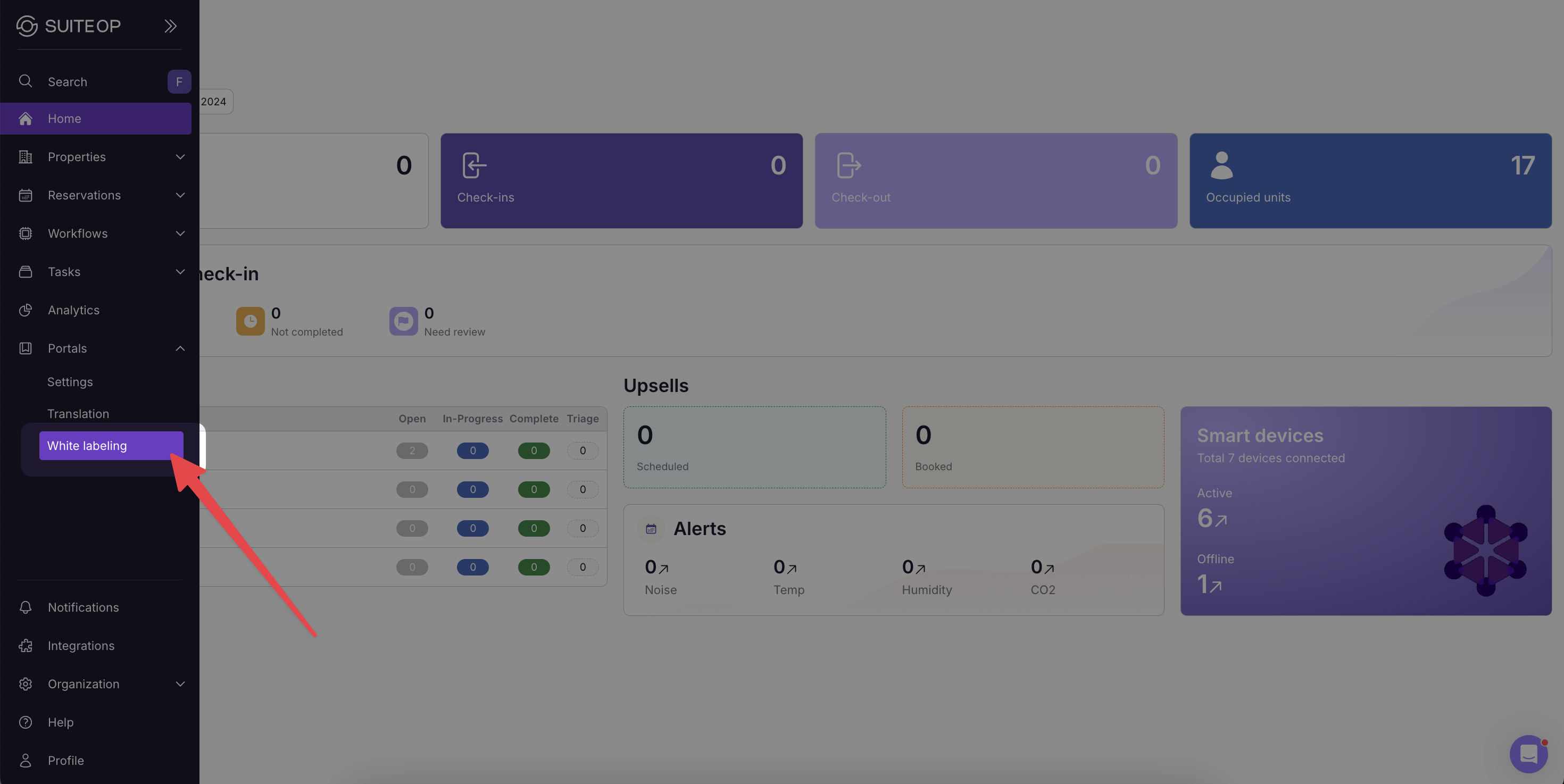
1. Go to Portals > White labeling in the navigation
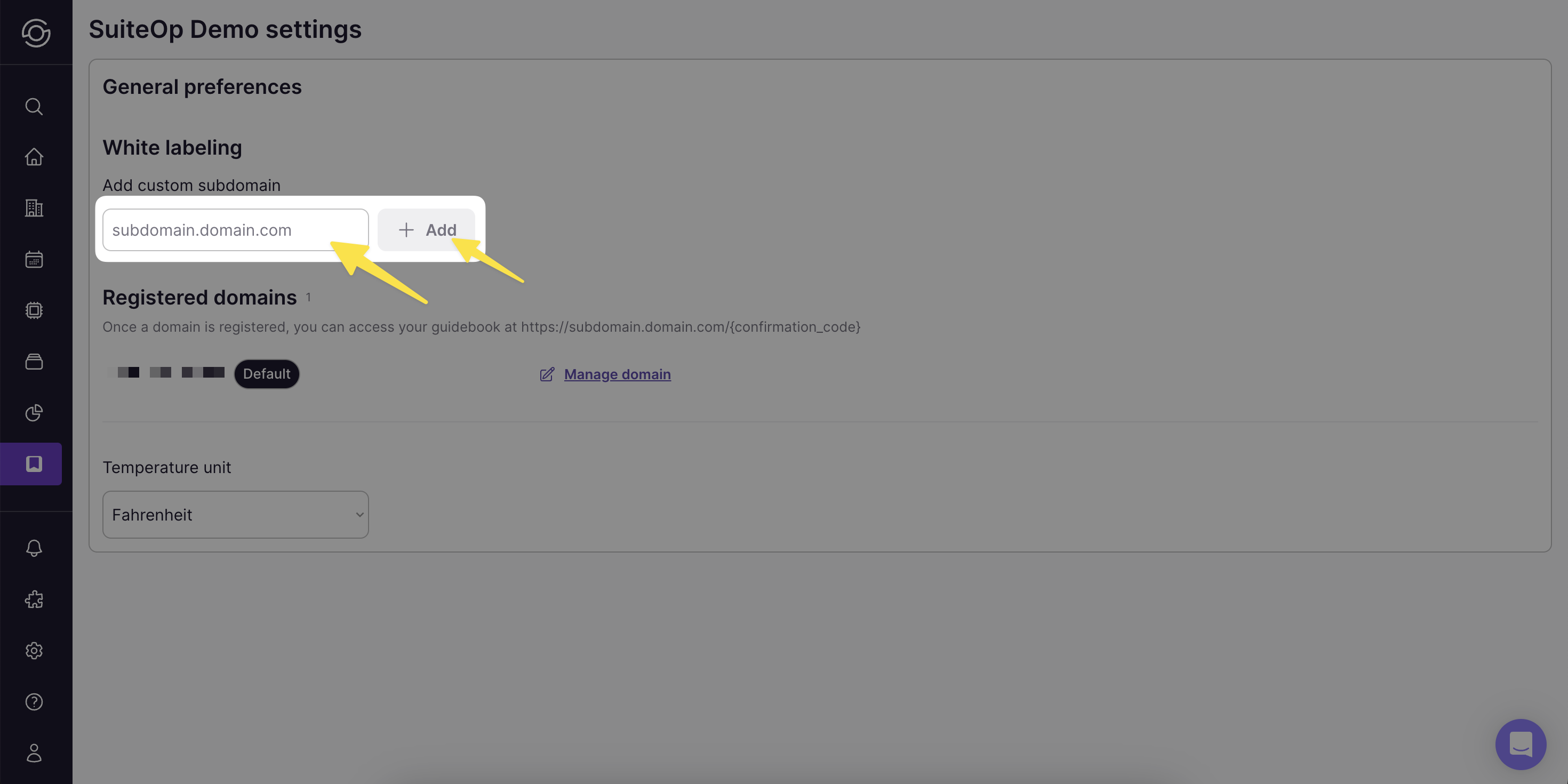
2. Add a subdomain of your choosing (portal.domain, welcome.domain, guest.domain, hello.domain, etc.) and click + Add
You will see two new CNAME records
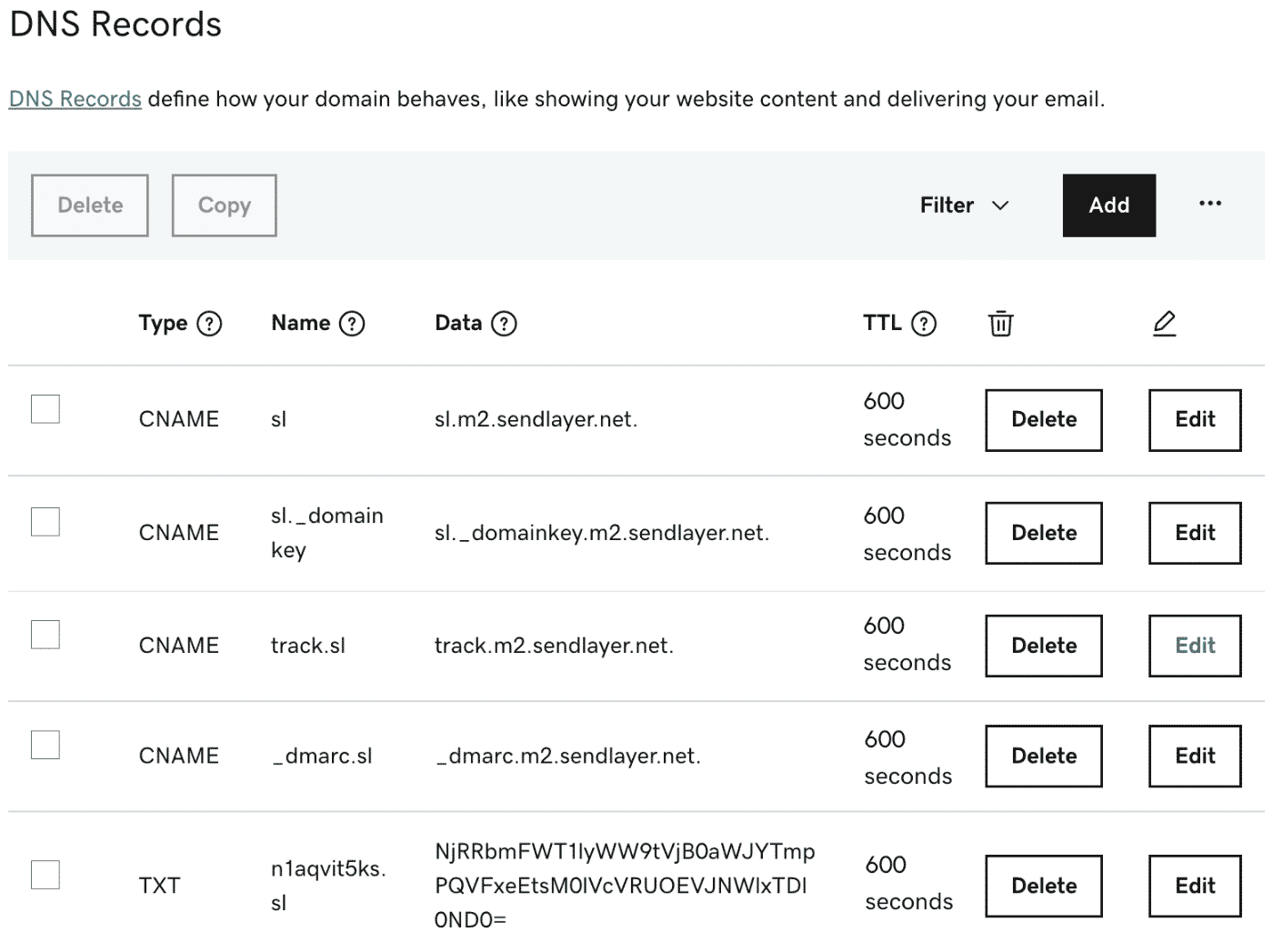
3. Next, head to your DNS settings and add the 2 CNAME records as suggested in the setup
You’ll do this in your DNS provider, this could be GoDaddy, SquareSpace, Namecheap or another provider. Once you log into your account you should see a section for DNS Settings. Here you’ll see a list of records and a button to add new records. You’ll simply copy and paste the records displayed in SuiteOp into the Name (sometimes called Title) and Value (sometimes called Content) fields. Make the records CNAME type and leave other fields as their defaults.
4. Wait up to 30 seconds, refresh the DNS in SuiteOp (using the refresh button) and both should show up green as soon as they have propagated
This usually happens pretty quickly, if not double check your records. Some providers automatically append your domain to the Name field, you may also try removing this from both records.
5. Click Add URL, and you’re done!
GoDaddy Tips
GoDaddy sometimes auto-appends your root domain to whatever you type in the “Name” field.
-
For example, if you enter guest.yourdomain.com in the Name field, GoDaddy may create** guest.yourdomain.comyourdomain.com** by mistake.
-
For CNAME records, the Name should usually be just the** subdomain part**:
- Use guest instead of** guest.yourdomain.com**
- Use _acme-challenge.app instead of** _acme-challenge.guest.yourdomain.com** That way, GoDaddy will automatically append .yourdomain.com for you.
SquareSpace Tips
SquareSpace sometimes auto-appends your root domain to whatever you type in the “host” field.
-
For example, if you enter guest.yourdomain.com in the host field, Squarespace may create** guest.yourdomain.comyourdomain.com** by mistake.
-
For CNAME records, the host should usually be just the** subdomain part**:
- Use guest instead of** guest.yourdomain.com**
- Use _acme-challenge.app instead of** _acme-challenge.guest.yourdomain.com** That way, Squarespace will automatically append .yourdomain.com for you.
What to do after your domain is activated
-
Update your Brand under the Portal settings Brand page . In each Brand, there is a dropdown to select which URL to use, select your newly activated custom URL here.
-
Add customizations! In the White labeling page , click manage domain next to your new domain.
-
In the SEO tab:
- Update the favicon
- Customize the page title & description
-
In the Customization tab:
- Add a new photo for the portal landing page background
- Add your brand colors
- Customize your text & font
-